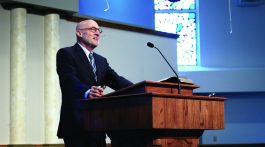
Cultural awareness reached a turning point with the public release of OpenAI’s ChatGPT in 2022. Google, Meta, Microsoft, and DeepSeek have unveiled similar AI-powered assistants. Ethical reflection upon the proper and improper uses of AI has not kept pace.
General concerns related to acceptable and unacceptable uses of AI can be narrowed to a focus upon local church life. In June 2023, a church in the German town of Fürth created a news splash by hosting a worship service generated entirely by AI. The forty-minute sermon was composed by ChatGPT and was delivered by avatars on a large screen above the Communion table. Three months later, a church in Austin, Texas, followed suit. The pastor explained that he was amazed by the range of AI possibilities, and he simply wished to see what it would look like to host an AI-generated worship experience.
- You have reached the end of this article preview. This article was published in the Summer 2025 Baptist Bulletin. Subscribe to the Baptist Bulletin or purchase a gift subscription. If you already subscribe to the print edition, sign up for free digital access.
Paul Hartog is a professor of theology at Faith Baptist Theological Seminary in Ankeny, Iowa, where he teaches theological ethics, among other subjects.
The content of this article was originally presented at the Refresh Conference of Faith Baptist Bible College and Seminary in January 2025. This edited version is published here by permission.